Nasal polyps are soft, noncancerous growths that develop inside the nasal canals and sinuses. They form after long periods of irritation and swelling in the sinus lining, often connected to chronic sinusitis, allergies, or asthma. Most cases are benign, though the growths can make breathing difficult, reduce the sense of smell, and lead to repeated sinus infections. Many patients are unsure when medication is enough and when nasal polyp surgery becomes the better option. Sinusitis in Seattle sees this question often among patients dealing with ongoing congestion and nasal blockage. This guide covers causes, symptoms, diagnosis, treatment, surgery, recovery, and prevention for nasal polyps.
Quick Answer:
What causes nasal polyps comes down to long-term inflammation in the nasal and sinus lining. Chronic sinus infections, allergies, asthma, and aspirin sensitivity are the most common triggers. Genetics and immune system response also have a role. Small polyps sometimes respond well to steroid sprays and saline rinses, while larger or recurring polyps often require nasal polyp surgery to restore normal breathing and sinus drainage.
What Are Nasal Polyps?
Nasal polyps are soft tissue growths that form on the lining of the nasal cavities or sinuses. They differ from ordinary nasal swelling because they are distinct, teardrop-shaped masses rather than general inflammation. Polyps typically grow in clusters near the sinus openings and can appear on one side or both sides of the nose. Bilateral nasal polyps, meaning growths on both sides, are more common than polyps that appear on a single side only. Adults over 40, people with asthma, and those with chronic sinus disorders are diagnosed with polyps most frequently.
What Causes Nasal Polyps?
Chronic inflammation is the leading factor behind nasal polyps. Sinus tissue that stays irritated for months or years is more likely to develop these growths. Common contributors include the following.
| Cause of Nasal Polyps | How It Contributes? |
| Chronic sinus infections | Repeated inflammation weakens the nasal lining over time |
| Allergies | Ongoing allergic reactions keep tissue swollen |
| Asthma | Shared airway inflammation increases polyp risk |
| Aspirin sensitivity (AERD) | Triggers strong inflammatory reactions in the sinuses |
| Genetics | Family history raises the likelihood of polyp formation |
| Immune system response | Certain immune patterns increase tissue overgrowth |
| Environmental irritants | Air pollution and smoking irritate sinus lining |
| Fungal infections | Rare, but can trigger localized inflammation |
According to the National Institutes of Health, nasal polyps are linked to chronic rhinosinusitis and are also associated with asthma, aspirin-exacerbated respiratory disease, and cystic fibrosis in a meaningful share of cases.
Who Is Most at Risk?
Certain groups face a higher chance of developing nasal polyps. Risk factors include age over 40, asthma, seasonal allergies, a family history of polyps, cystic fibrosis, aspirin sensitivity, recurring sinus infections, and long-term exposure to poor air quality.
Symptoms of Nasal Polyps
Nasal polyps symptoms typically build gradually. Usual indications include a blocked or stuffy nose, runny nose, reduced sense of smell, reduced taste, snoring, facial pressure, headaches, postnasal drip, frequent sinus infections, nasal obstruction, bad breath, and disrupted sleep. An evaluation with an ENT is recommended when breathing through the nose becomes consistently difficult, smell loss lasts more than a few weeks, or sinus infections recur three or more times a year.
Nasal polyps typically look gray or translucent, resemble small grapes, feel soft to the touch, and do not cause pain on their own.
Can Nasal Polyps Go Away Without Treatment?
Small nasal polyps sometimes shrink with steroid sprays or lifestyle changes such as reducing allergen exposure. Larger polyps rarely disappear without medical treatment. Once a polyp blocks a significant portion of the nasal passage, medication alone is usually not enough to fully clear it.
How Are Nasal Polyps Diagnosed?
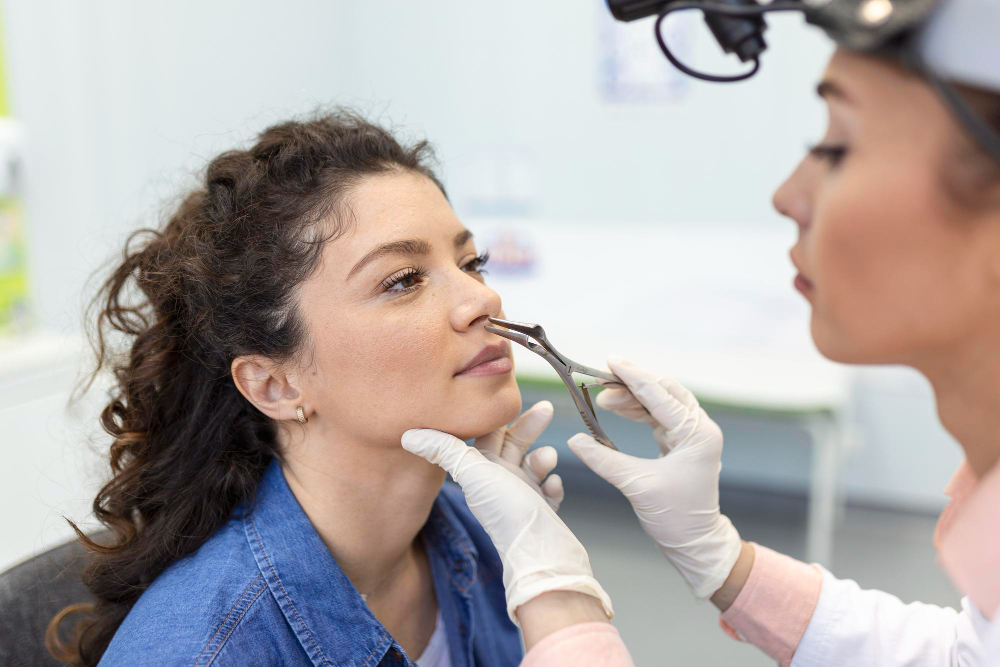
Diagnosis starts with a review of medical history and a physical examination. A nasal endoscopy allows direct visualization of the nasal passages and sinus openings using a thin camera. A CT scan provides a detailed view of the sinuses and helps determine the size and location of polyps. Allergy testing may be recommended when allergies are suspected as a contributing factor. MRI and biopsy are used only in rare or unusual cases.
Treatment Options for Nasal Polyps
Treatment generally follows a step-by-step approach, starting with medication and moving toward surgery when needed.
- Nasal Steroid Sprays: According to sources, these sprays reduce inflammation directly at the site of the polyps and are frequently the first line of treatment. Regular use can shrink smaller polyps and ease nasal obstruction.
- Oral Steroids: Prescribed for more severe inflammation, oral steroids work faster than sprays but carry a higher risk of side effects such as elevated blood sugar or mood changes, so use is usually short term.
- Saline Irrigation: Rinsing the nasal passages with saline solution, similar to the sinus irrigation methods recommended for chronic sinus disorders, helps remove mucus and reduce irritation daily.
- Allergy Management: Allergy shots and avoiding known triggers reduce the ongoing inflammation that contributes to polyp growth.
- Biologic Medications: Dupilumab is approved for chronic rhinosinusitis with nasal polyps in patients who do not respond to standard treatment. It targets the underlying inflammatory pathway rather than just easing symptoms.
When Is Nasal Polyp Surgery Needed?
Nasal Polyp Surgery becomes necessary when medication no longer controls symptoms, when polyps are large enough to block airflow, when sinus infections keep recurring, or when smell loss and sleep problems continue despite treatment. Bilateral nasal polyps that affect both sides of the nose often require surgical removal once they reach a certain size.
What Happens During Nasal Polyp Surgery?
Nasal polyp removal is typically performed through endoscopic sinus surgery, a minimally invasive procedure that uses a thin camera and small instruments inserted through the nostrils. No external incisions are needed. The surgeon removes the polyps and opens narrowed sinus passages to improve long-term drainage. The procedure is done under general anesthesia and completed on an outpatient basis, meaning patients go home the same day. At Sinusitis in Seattle, this approach is paired with a full evaluation to treat any underlying sinus condition causing polyp growth.
Recovery After Nasal Polyp Surgery
Nasal polyps recovery time varies by patient, but most people follow a similar general timeline.
| Time | What to Expect? |
| First 24 hours | Rest, mild bleeding, congestion |
| First week | Reduced activity, saline rinses begin, some fatigue |
| 2 weeks | Light activity resumes, follow-up visit scheduled |
| 3 to 4 weeks | Most swelling resolves, breathing improves |
| 6 weeks | Full return to exercise and normal routine |
| Complete healing | Sinus tissue fully settled, long-term care begins |
Strenuous activity is typically avoided for at least a week. Light exercise can often resume after one to two weeks, with a full return to regular exercise routines around four to six weeks. Follow-up visits allow the surgeon to check healing and clear any residual crusting.
Does Nasal Polyp Surgery Hurt?
Discomfort after nasal polyp surgery is usually mild. Most patients describe pressure and congestion rather than sharp pain. Over-the-counter pain relief is often enough, and prescription painkillers are rarely necessary.
Risks and Possible Complications
As with any procedure, nasal polyp surgery carries some risk, including bleeding, infection, scar tissue formation, and polyp recurrence. Anesthesia risks apply as they do with any surgery requiring sedation. Vision complications and cerebrospinal fluid leaks are extremely rare and occur in a very small fraction of cases when performed by an experienced surgeon.
Can Nasal Polyps Come Back?
Nasal polyps can return, particularly in patients with chronic sinusitis, asthma, or aspirin sensitivity. Maintenance care, including steroid sprays, regular ENT visits, and ongoing allergy management, lowers the chance of recurrence significantly.
Tips to Prevent Nasal Polyps from Returning
Using a humidifier, avoiding smoking, treating allergies consistently, managing asthma, using saline rinses regularly, controlling sinus infections early, and following ENT recommendations all reduce the likelihood of polyps forming again.
Why Choose an Experienced Sinus Surgeon?
An experienced sinus surgeon brings more accurate diagnosis, advanced endoscopic equipment, and a lower chance of complications during nasal polyp surgery. Long-term outcomes and breathing results also tend to improve with a surgeon who regularly performs these procedures.
Why Patients Choose Sinusitis in Seattle
Patients often choose Sinusitis in Seattle for experienced ENT care built around personal treatment plans. The practice uses advanced, minimally invasive surgical techniques and provides comprehensive follow-up care after every procedure. A patient-focused approach guides each stage of diagnosis and treatment.
Meet Dr. David Santos
Dr. David Santos is a board-certified ENT surgeon and board-certified facial plastic surgeon with more than 30 years of experience. He trained at Tulane University School of Medicine, completed a general surgery residency followed by an ENT residency, and pursued additional fellowship training. Recognized as one of Seattle’s leading sinus surgeons, Dr. Santos continues adopting advanced sinus surgery techniques to enhance outcomes for patients dealing with chronic nasal polyps and related sinus disorders. His depth of experience matters most in complex or recurring cases, where precise diagnosis and technique directly affect long-term results.
Conclusion
Nasal polyps develop from chronic inflammation and are usually linked to conditions such as allergies, asthma, or long-term sinus infections. Treatment ranges from steroid sprays and saline rinses to Nasal Polyp Surgery for larger or recurring growths. Recovery is generally manageable, with most patients returning to normal activity within four to six weeks. Early diagnosis leads to better long-term outcomes and lowers the chance of recurrence. Sinusitis in Seattle offers evaluation and treatment for patients experiencing ongoing nasal blockage or sinus symptoms.
Chronic nasal blockage, reduced sense of smell, or repeated sinus infections are worth an expert evaluation rather than months of guesswork. Call us on 206-242-3696 to schedule a consultation with Sinusitis in Seattle to get an accurate diagnosis and a treatment plan built around the specific cause of the symptoms.
FAQs
What causes nasal polyps?
Chronic inflammation in the nasal and sinus lining causes nasal polyps, frequently associated with allergies, asthma, chronic sinusitis, or aspirin sensitivity.
Are nasal polyps cancer?
No. Nasal polyps are noncancerous growths, though unusual-looking polyps are occasionally tested to confirm this.
Can nasal polyps disappear naturally?
Small polyps sometimes shrink with steroid sprays and reduced allergen exposure. Larger polyps rarely resolve without treatment.
Is surgery always necessary?
No. Many patients manage symptoms with medication. Surgery is recommended when polyps are large, recurring, or affecting breathing significantly.
How long is nasal polyps recovery time?
Most patients see major improvement within three to four weeks, with full recovery around six weeks.
Can exercise resume after surgery?
Light activity often resumes after one to two weeks, with a full return to exercise around four to six weeks.
Will nasal polyps grow back?
Recurrence is possible, especially lacking ongoing maintenance care such as steroid sprays and regular ENT checkups.
Is nasal polyp surgery painful?
Most patients report pressure and congestion rather than sharp pain, with discomfort well controlled by over-the-counter medication.
How successful is nasal polyp surgery?
Surgery is generally effective at restoring breathing and reducing sinus infections, particularly when paired with ongoing maintenance treatment.
Can allergies cause nasal polyps?
Yes. Ongoing allergic inflammation is one of the most common contributing factors.
Are nasal sprays enough on their own?
For smaller polyps, sprays often manage symptoms well. Larger polyps typically need additional treatment.
When should an ENT be consulted?
An ENT evaluation is recommended when nasal obstruction persists, smell loss continues for weeks, or sinus infections recur frequently.
Can children develop nasal polyps?
Yes, though it is less common than in adults. Recurring or bilateral polyps in children are sometimes linked to cystic fibrosis.
How long does nasal polyp surgery take?
The procedure is typically completed within one to two hours and performed on an outpatient basis.